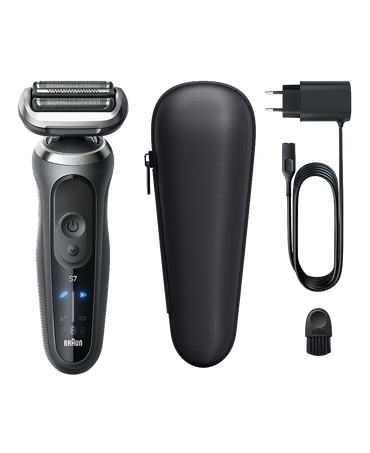
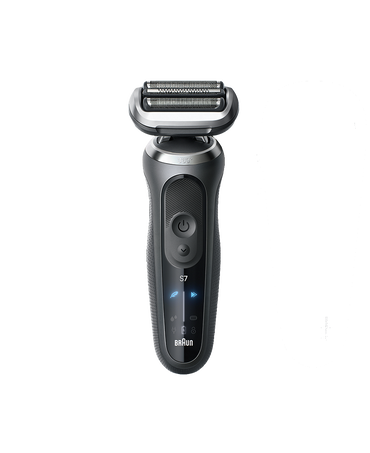
Choosing an electric shaver can be confusing. Rotary or foil, wet or dry, three-blade or more - there's a lot of noise to wade through before you land on the one that actually suits your face. This guide cuts through it, so you can walk away knowing exactly what to look for and why.
How an electric shaver actually works
The principle is simple. A motor drives a set of blades behind a thin metal mesh. The mesh sits flush against the skin, hair pokes through the holes, and the blades behind the mesh slice the hair off close to the surface. The mesh acts as a guard, so the blades never touch your skin directly.
The quality of a shaver comes down to how well it manages that process. A better shaver follows the contours of your face, cuts more hair per pass, and leaves the skin feeling smooth rather than raw. That means a faster shave in the morning and less redness through the day.
Two shavers might look similar on the outside but feel completely different against your face. The difference sits in the motor speed, the flexibility of the head, and the quality of the cutting elements behind the screen.
How "below the skin" electric shavers work
You'll see "below skin level" claims on higher-end electric shavers, and they're worth understanding - because the headline isn't quite what it sounds like.
The blade itself doesn't reach beneath your skin. The foil and head guards are there specifically to prevent that, which is what makes electric shavers gentler than manual razors in the first place. What's actually happening is a two-part process. The shaver head uses its technology to either lift the hair or push the skin to reveal more of the hair than a regular shaver. When released, the short hair retracts under the skin's surface. The blade itself never goes below skin level - the cut hair ends up there.
What you feel from this:
- The face stays smoother for longer between shaves
- Stubble takes longer to push back through the surface
- The morning-after shadow feels softer to the touch
What separates a good electric shaver from a great one
A few small things make all the difference once you're using a shaver every day. These are the ones worth paying attention to.

The motor
Entry-level shavers use slower motors that can stall on thicker patches of stubble. Premium shavers run faster, cutting hair before it gets pulled or tugged. You'll feel it most around the jawline and neck, where stubble grows in different directions and lower-powered shavers tend to drag.

Head flexibility
Skin isn't flat. A good shaver has a head that pivots, flexes, and floats over the bumps of your jaw, chin and neck without you having to keep readjusting the angle. The more contact the head keeps with the skin, the closer the shave.

Blade quality
The blades behind the screen do all the cutting. Sharper blades shave closer with less pressure, which is what protects your skin from irritation. Lower quality blades dull faster and start to pull instead of slice - the first place you'll notice it is your neck.

A built-in trimmer
Most great shavers include a pop-up trimmer on the back to trim longer hairs before shaving. It looks small, but it's the difference between a polished finish and a half-finished shave. Use it for sideburns, the edge of a beard, or moustache detail.

Wet & dry capability
A shaver you can use in the shower with foam, or dry over the bathroom sink, gives you more options through the week. It also makes cleaning easier - a quick rinse under the tap and you're done.

Battery life and charging
Nickel batteries (NiMH) often need an hour on the cradle for a single shave. Better shavers usually have lithium-ion (Li-Ion) batteries, which offer quick-charge support, longer runtime, and a clear battery indicator, so you're never caught flat before work.

The main types of electric shavers
Most electric shavers fall into one of two camps. They both take hair off your face, but they go about it differently. Here's what each one does and who it suits.
Foil shaver
Oscillating blades vibrating beneath a flat metal screen.
Rotary shaver
Circular heads that spin independently and pivot to follow the face.
Matching a shaver to your face
The "best" electric shaver depends entirely on what's growing on your face and how your skin reacts to a blade. Here's a quick guide.
Coarse or thick beards
Look at rotary shavers or a high-end foil with a strong motor. The cutting elements need enough power to slice through dense stubble without slowing down, and multiple cutting tracks help catch hairs lying in different directions.
Fine or patchy growth
A foil shaver is usually the better pick. It cuts shorter stubble close to the surface without the head needing to work as hard. Less power, less heat against the skin, less chance of irritation afterwards.
Sensitive skin
Look for a shaver with a flexible head, a low-speed setting, and a screen built specifically for sensitive skin. Wet & dry capability is worth having too - shaving with foam or gel cuts friction noticeably and gives your skin a softer ride.
Curly or ingrown-prone hair
Rotary shavers tend to be kinder here. The lifting action of the spinning heads catches hair without pulling as tightly as a foil, which reduces the risk of ingrowns settling in afterwards.
Daily shavers
A fast foil with a strong battery and quick-charge support is the routine-friendly choice. You'll be in and out of the bathroom in three minutes flat.
Once or twice a week
A rotary shaver handles longer stubble more comfortably and won't strain on the heavier days. Pair it with a good pop-up trimmer for tidy-ups in between.
Head shavers
Look at dedicated head shavers or models with multiple independent flexing heads. Scalp skin is thinner and curves more sharply than the face, so head flexibility matters more than raw cutting power.
Wet vs dry shaving
Most modern electric shavers can do both. Which one you reach for depends on your skin and your morning.
Dry shaving
Faster, no setup. Pull the shaver out, switch it on, run it over your face, done. Best for the morning rush, travel, or a quick tidy-up through the day.
Wet shaving
Slower, but kinder on the skin. Apply a thin layer of gel or foam, then shave as you would dry. The lubrication reduces friction against the skin, which means less heat and a closer feel by the end. Most wet & dry shavers can be rinsed straight under the tap, which keeps cleaning quick. Check whether your shaver is wet and dry before rinsing it off - or you can give us a call or drop by in store to check with our experts.
If your skin tends to react to shaving, wet is usually the better starting point. Once your skin settles in, you can decide whether to keep wet-shaving or switch to dry for speed.
How to shave with an electric shaver properly
A premium shaver does most of the work, but technique still counts. The same shaver in two different hands gives two different results.
- Start with a clean face. Even a quick splash of warm water softens the skin and lifts the hairs
- For wet shaving, apply a thin, even layer of gel or foam
- Hold the shaver at a 90-degree angle to the skin, not flat
- For foil shavers, move in straight strokes against the direction of hair growth
- For rotary shavers, use small circular motions, working over each area twice
- Stretch the skin with your free hand on curved areas like the neck and jawline
- Finish with the pop-up trimmer for sideburns and edges
- Rinse the head straight after, then pat your face dry
Two small habits do most of the heavy lifting: keep the head moving, and apply less pressure than you think you need. Pressing harder doesn't shave closer — it just irritates the skin and dulls the blades faster.
Electric shaver attachments and accessories
The accessories that come with a shaver change what it can actually do day to day. Here's what each one is and when it earns its place in the cabinet.

Trimmer attachment
Already built into most shavers as a pop-up. Use it for sideburns, beard edges, and moustache detail, or to trim longer hair before shaving. Small feature, big impact on the finished look.

Beard trimmer comb
Some shavers come with a comb attachment that turns the trimmer into a short beard trimmer. Useful for keeping a tidy line between proper beard trims.

Cleaning station
Premium shavers often include a self-cleaning dock that flushes the head with cleaning fluid, lubricates the blades, and dries the shaver between uses. It's the difference between a one-minute clean and a thirty-second rinse - and it noticeably extends the life of the heads.

Travel case
A simple hard case protects the head from knocks in your bag and stops the shaver switching on by accident.

Replacement heads
Foil and rotary heads both wear down over time. Most need replacing every 12 to 18 months to keep the shave close. Always check what your model takes before the heads start pulling.
Caring for your electric shaver
A bit of maintenance keeps a shaver cutting at full strength for years. Most shavers that "stop working properly" haven't actually broken - the head's just clogged with hair and skin residue.
- Rinse the head under warm water after every shave on wet & dry models
- Use the cleaning brush on the shaver head at least once a week
- Lubricate the blades every few weeks with a drop of shaver oil
- Replace foils or rotary heads when the shave starts feeling rougher than usual
- Store the shaver somewhere dry and ventilated, not in a humid bathroom cabinet
- Always let the head dry fully before putting it away
If your shave suddenly feels less close than it used to, check the head before assuming the motor's gone. Nine times out of ten it's a clean or a head replacement, not a dead shaver.
When it's worth spending more
All electric shavers cut hair. That's not in question. The difference shows up over time, and it shows up in the details.
A premium shaver will:
- Shave closer on the first pass, so you spend less time going back over the same area
- Flex more accurately around your jawline and neck, where most irritation tends to happen
- Run faster and quieter, even after years of daily use
- Hold a charge longer between visits to the cradle
- Stay comfortable on sensitive skin, even on consecutive days
- Last considerably longer before the motor or blades start to drop off
If you shave most days, the cost per use of stepping up is small. If you only shave once or twice a week, a solid mid-range model is usually plenty. The decision sits less in the price tag and more in how often you'll actually feel the difference.
Questions we get in store all the time
01 Q: How long should a good electric shaver last?
A: A quality shaver will typically run for five to seven years with regular use, sometimes longer. The motor outlasts the heads, so most "old" shavers come back to life with a fresh set of foils or cutters. Most electric shavers also come with a two-year warranty period.
02 Q: How often should I replace the heads?
A: You should replace the shaver head around every 12 to 18 months for daily users. If the shave starts feeling rougher, tugging at the hair, or taking more passes than usual, then it's time for a new set.
03 Q: Are wet & dry shavers worth it?
A: Wet and dry shavers are worth it for most people, yes. The flexibility to shave in the shower, use foam if your skin needs it, and rinse the head clean under the tap is worth the small step up.
04 Q: Can an electric shaver irritate the skin?
A: An electric shaver can irritate your skin if it's used poorly. Pressing too hard, going against the grain too aggressively, or letting the heads get dull are the usual culprits. Good technique and clean heads sort most of it out. If your shaver is suitable for wet & dry use, you can also use creams, oils, or foam to help reduce irritation.
05 Q: Rotary or foil for a first-time electric shaver?
A: For a first time shaver, if you're switching from a manual razor, a foil shaver feels more familiar — the flat head moves across the face in a similar way. If you have thicker or curlier hair, a rotary shaver will usually feel more comfortable from the start.
06 Q: Do I really need a self-cleaning station?
A: A self-cleaning station is not strictly needed. A rinse and a brush under the tap will do the job. But if you find yourself skipping cleaning more often than you should, the station does it for you and extends the life of the heads.
07 Q: Can I shave straight after a shower?
A: Yes - in fact, shaving after a warm shower is one of the best ways to get a close, comfortable shave. The warmth softens the hair and opens the skin, so the blades glide more easily.
08 Q: Why is my electric shaver pulling at my hair?
If you find that your electric shaver is pulling your hair, it is almost always one of three things: the heads need replacing, the cutting blade is clogged with hair, or your hair is too long. Try trimming your beard short first, then a deep clean, and if it's still pulling, swap the foils or rotary heads.
Our Electric Shavers
We've carefully curated our range of electric shavers to cover every beard type, every routine, and every budget. Whether you're after your first foil or stepping up to a premium rotary, there's something in the range to suit.





.jpg?sw=370)